
Understanding the 40% Trade Value Difference Limit in Blox Fruits

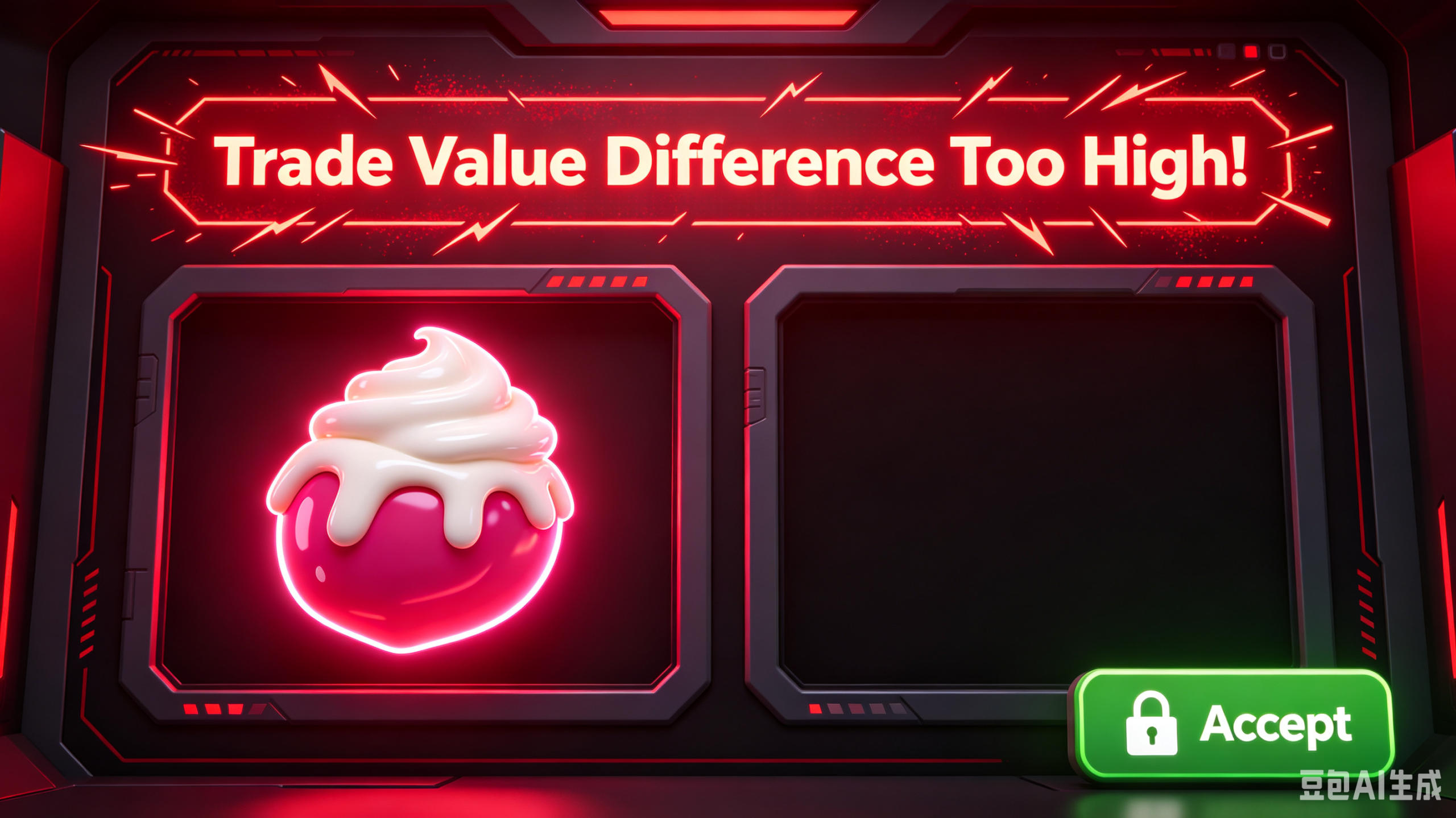
There is nothing more frustrating than spending an hour haggling in a Discord server, finally agreeing on a massive trade, jumping into a Second Sea server, and getting hit with that dreaded red text: “The trade value difference is too high!”
The game’s mandatory 40% trade value lock is supposed to be an anti-scam feature designed to protect naive players from dropping a Mythical fruit for a common Rocket fruit.
However, because the developers calculate this limit using their outdated, static in-game Beli prices instead of real community demand, the system is completely broken. In 2026, smart traders don’t complain about the 40% rule—they manipulate it. Here is the exact math behind how the lock works and the blueprint to bypass it every single time.
The Broken Math Behind the 40% Lock
The game’s trade system looks at one thing and one thing only: the combined Beli value of the fruits in Slot A versus Slot B. It does not care that a physical Buddha is worth ten times more than a physical Gravity in the real world.
The mathematical rule is simple: The lower-priced side of the trade window must be at least 60% of the value of the higher-priced side.
Let’s look at a classic breakdown where the system ruins a perfectly fair community deal:
- The Deal: You are trading your high-demand Buddha fruit (Market Trade Value: Very High) for an opponent’s Blizzard fruit (Market Trade Value: Balanced). The community agrees this is a dead-even, fair trade.
- The Beli Trap: In the official game files, Buddha is priced at $1,200,000 Beli, while Blizzard is priced at $2,400,000 Beli.
- The Crash: Because $1.2M is exactly 50% of $2.4M (which breaks the 40% maximum allowed variance gap), the game locks the green Accept button. It flags a fair trade as illegal.
Pro Strategy: How to Use “Value Buffers” to Crack the Lock
Top Meta Value Buffers Index
Never discard these fruits. Keep them in your vault exclusively to crack open the 40% trade value limit when executing premium deals:
To bypass this artificial wall without losing your actual inventory net worth, you need to maintain a dedicated stash of what veteran traders call “Value Buffers” or “Trash Adds.”
These are high-Beli value fruits that possess absolute garbage demand in PvP or grinding. They exist in your inventory for the sole purpose of filling the game’s green Beli progress bar.
The absolute best budget buffer fruits on our Blox Fruit Calculator are:
- Gravity ($2,500,000 Beli): The ultimate weight-lifter for high-tier trades. Nobody wants it for combat, but its massive Beli tag can instantly balance a trade for a Leopard or Dragon.
- Pain ($2,800,000 Beli): Functions exactly like Gravity. High face-value, zero functional utility.
- Quake ($1,500,000 Beli) & Spider ($1,500,000 Beli): Perfect mid-tier buffers for balancing Legendary swaps like Portal or Rumble.
The Balancing Blueprint:
If the game tells you to add value, do not throw in a Portal or Blizzard just to make the system happy. That is giving away free money.
Instead, slip a Quake or Spider into the window. Tell the other player: “This is just for the 40% game price balance.” Since both players know these buffer fruits have low market liquidity, they don’t disrupt the core equity of the deal.
Beware of the “Value Buffer” Scam
Now that you know how the math works, you must protect yourself from flippers who try to turn this mechanic against you.
A common hustle in the Third Sea is when a scammer says: “Hey, my Kitsune costs $8,000,000 Beli, the game won’t let me lock the trade unless you add more.” They will try to bully you into replacing your trash buffers with real, high-demand assets like a Dough or T-Rex.
How to counter it: Keep our live calculator open on your second screen. If the calculator shows that your side already matches their true market value, refuse to add any more premium assets. Force them to drop low-Beli, high-demand fruits on their side, or find a different trading partner who understands real economic values rather than developer shop prices.
